

The main difference between radial and bias ply tyres is in the belt construction. The cord materials too are different, leading to changes in the functional performance of the tyres.
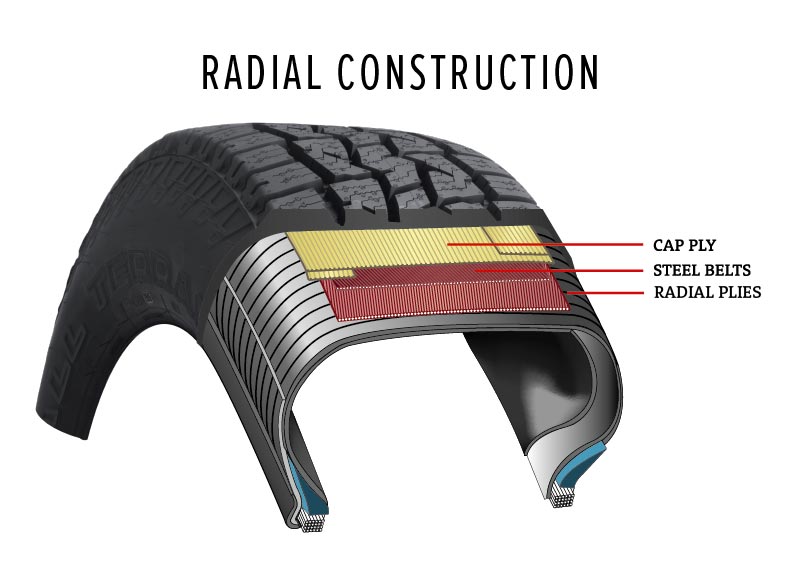
Radial Tyres:
In radial tyres the steel belts run at a 90-degree angle with the tread line. It allows the sidewall and the tread of the tyre to function independently. Thus, there is low sidewall flex and more contact with the ground.
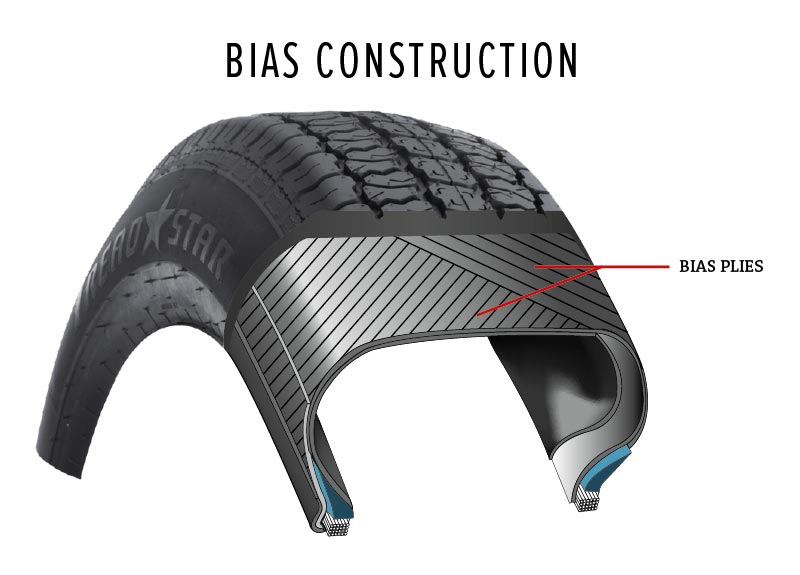
Bias Ply Tyres:
In bias ply tyres the nylon belts run at 30 to 45-degree angle with the tread line. The multiple, over lapping rubber plies in these tyres connect the sidewall and tread. The stiff internal construction causes less contact with the ground and may result in overheating.
Radial vs. Bias Ply Tyres
Pros of Radial Tyres:
- Runs cooler at highway speeds and under loadSteel belts provide tougher construction and higher puncture resistance
- Uniform contact with the ground provides uniform tread wear
- Wider footprint of these tyres keeps the vehicle stable
Cons of Radial Tyres:
- Steel belt construction affects the ride quality adversely
- Curb impacts can cause sidewall damage
- Harder tread increases tyre noise
Pros of Bias Ply Tyres:
- Tougher side walls due to the crosshatch construction
- Smoother ride on rough surfaces
- Less expensive than radial tyres
Cons of Bias Ply Tyres:
- Tread wears faster due to higher traction
- High rolling resistance can affect fuel economy
- Roll-over effect causes loss of traction while cornering
 Tireclopedia
Leave a comment