
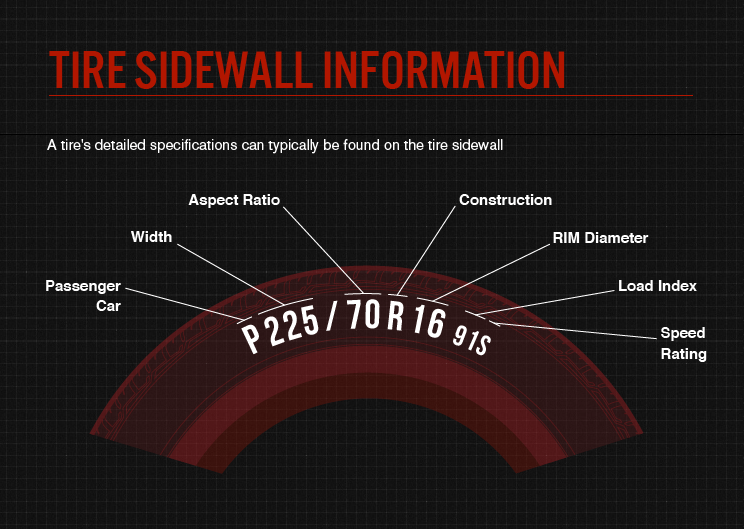
THE LETTERS “P” AND “LT”
For most vehicles, you’ll see the letter “P” before the number sequence begins: P225/70R16 91S. The “P” is short for “P-metric” which is a designation by the Tire and Rim Association for a “passenger car” tire type. This signifies the tire was designed to primarily be used on passenger vehicles, which can include cars, minivans, SUV’s, and other light duty pickup trucks.
If there’s no ‘P’ before tire size, the tire is of “Metric” type (also known as Euro Metric/Hard Metric). This designation is according to The European Tyre and Rim Technical Organization (ETRTO).
These standards have different reference tables for load carrying capacities, for given Load Index.
If you see “LT” instead of “P,” it’s because you need “light truck” tires – “LT” is short for “LT-metric” which is a designation by the Tire and Rim Association for a “light truck” type tire. Light truck tires are designed to be used on vehicles capable of carrying heavy cargo or pulling trailers.
Similarly, “T” stands for “temporary” and is for your spare tire. If you see “ST,” that means “special trailer.”
How to Read Tire Size?
There are different methods to designate a tire size. Flotation Tire Size is another menthod . However the most common format found in everyday cars is “225/70R16 91S” and let’s discuss how to read it.
WIDTH 
The first number to appear in your tire size information is the width, in millimeters, of the correct tires for your vehicle: P225/70R16 91S.
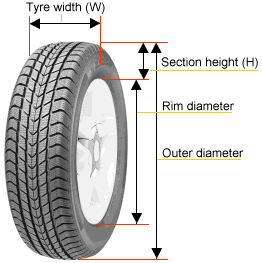
Tire width always refers to the measurement from one sidewall to another. Thus, a tire with the measurement “P225” is for a passenger vehicle and has a nominal width of 225 millimeters. This is the width of an inflated tire in millimeters at its widest point from sidewall to sidewall.
ASPECT RATIO
After the slash mark, the next number you see is for the tire’s aspect ratio, which essentially tells you how tall your tire’s profile is: P225/70R16 91S. Aspect ratios are delivered in percentages. Tire makers calculate the aspect ratio by dividing a tire’s height off the rim by its width. If a tire has an aspect ratio of 70, it means the tire’s height is 70% of its width.
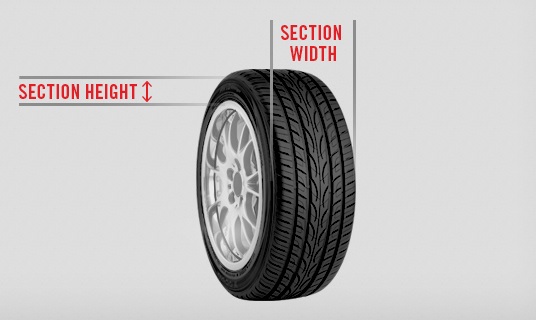
Section Height (H) = Width * Aspect Ratio (%)
ie. Section Height (H) = 225 mm * 70% = 157.50 mm
Lower aspect ratio tires, such as a 60 series, generally offer vehicle handling performance advantages over higher aspect ratio tires, such as a 75 series.
CONSTRUCTION
After the aspect ratio comes a letter that indicates the type of internal construction maintaining your tire’s stability: P225/70R16 91S.
There are two types of construction that you may see on the sidewall of a tire:
- R – Radial
- D – Diagonal or Bias Ply
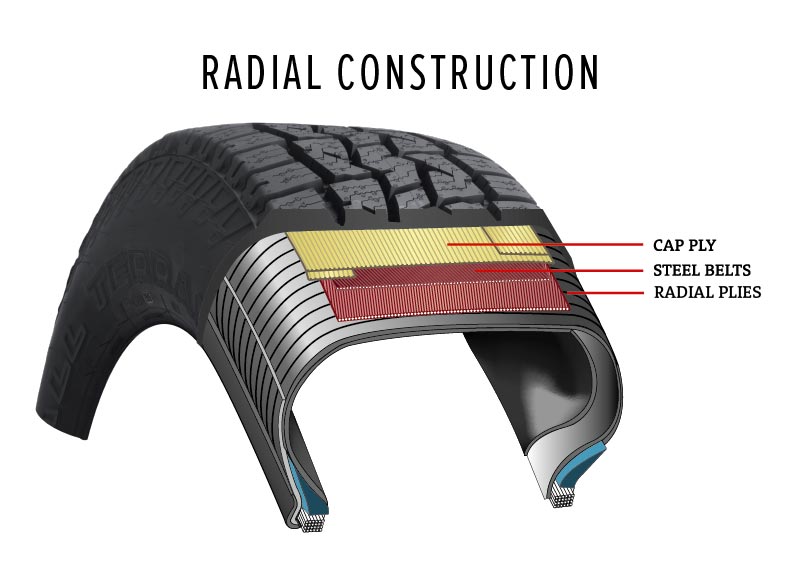
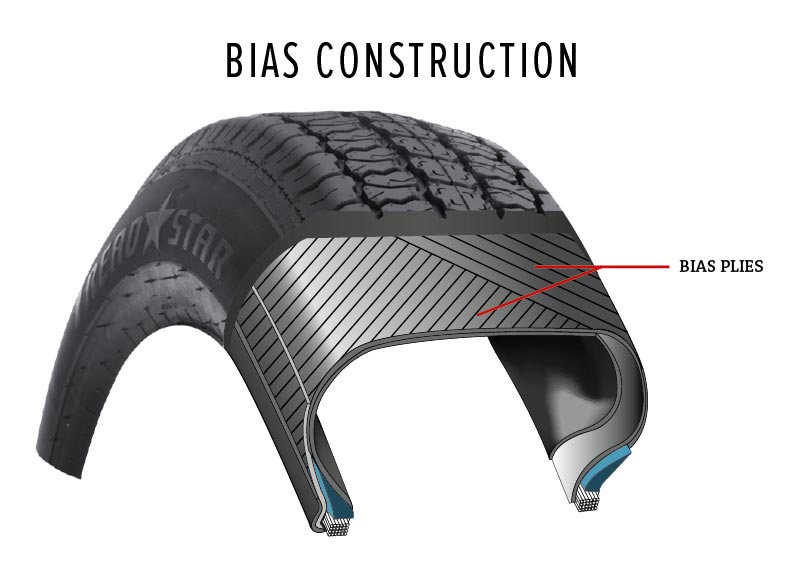
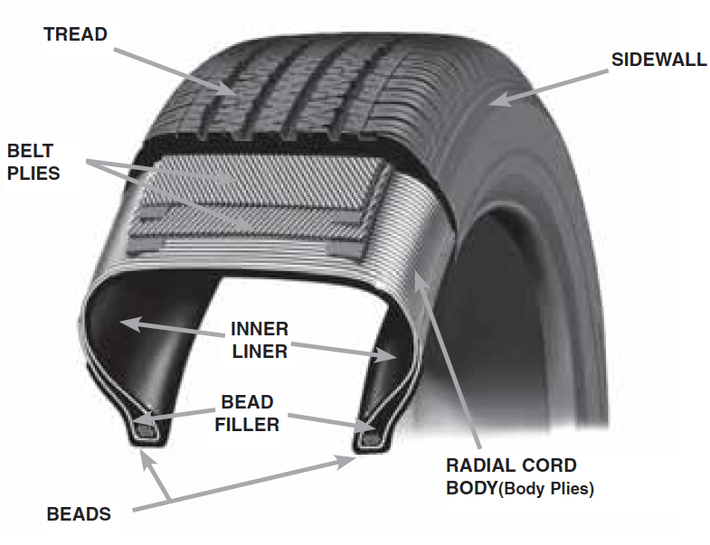
Radial tires represent the vast majority of tires on the road today; thus “R” will usually be shown in the tire size designation. Radial construction means the tire’s internal ply cords are oriented in a radial direction, from one bead over to the other, essentially perpendicular to the axis of rotation.
RIM DIAMETER
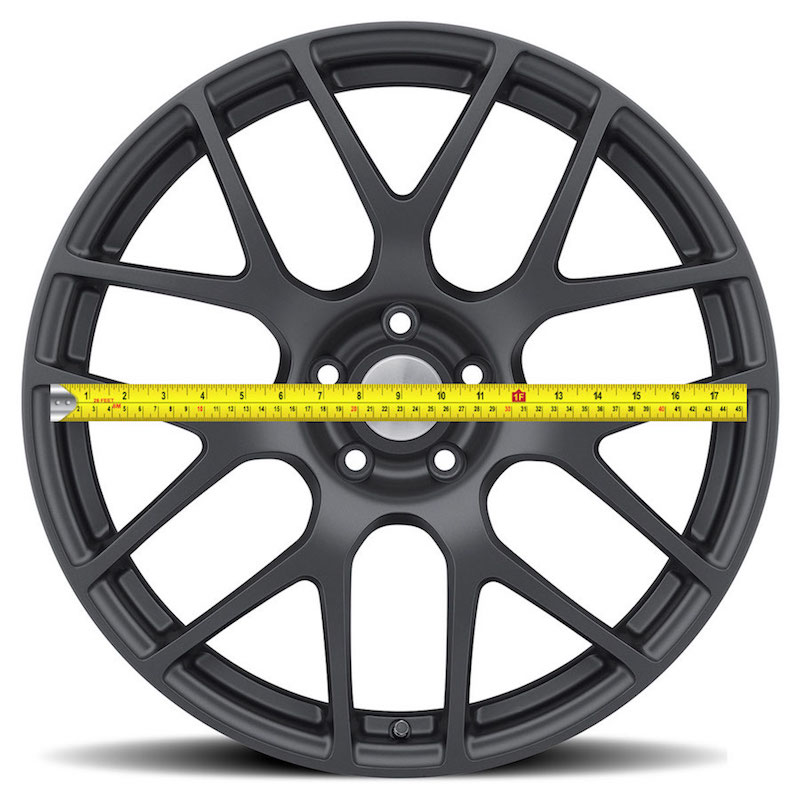
The next number is the diameter code, in inches, of the rim onto which the tire can be mounted. For example, a tire with the P225/70R16 91S would fit a rim with a 16-inch diameter.
LOAD INDEX
The next figure in the sequence is your tire’s load index, which tells us how much weight, in pounds, the tire can support when fully inflated: P225/70R16 91S
We call it the load “index” because the number doesn’t tell us the precise number of pounds the tire can carry, at least not by itself. However, the number does correspond to a specific load capacity listed in an index. Beginning with 1 and ending with 150, numbers in the load index represent carrying capacities of 99 to 7385 lbs.
Metric Tire Load and Inflation Table
P-Metric Tire Load and Inflation Table
SPEED RATING
The final figure in a tire size sequence is the speed rating, which is indicated by a letter: P225/70R16 91S. Just as your load index number corresponds to a particular load, your speed rating letter corresponds to a particular speed capability based on a standardized laboratory test.
For example, a tire with speed rating “S” is rated for up to 112 mph, while a tire rated “R” is up to 106 mph. Remember that this isn’t a recommended cruising speed. Of course, you should always follow legal speed limits on roadways.
Tires with higher the speed ratings, tend to offer increasing handling performance. Replacement tires must have the same or higher speed rating to maintain vehicle speed capability. If a vehicle has tires with different speed ratings, it is the speed rating of the “slowest” tire that dictates the vehicle top speed.
More about Speed Rating
Speed Rating Z – What you mean by letter ‘Z’ in tire size
Tire Speed Rating Y with parentheses (Y)
 Tireclopedia
Leave a comment